Rising stress absenteeism requires a preventive approach
Stress-related complaints are one of the biggest challenges within absenteeism management. Recent figures show that the number of days of absence due to stress has increased by as much as 49% over the past five years. For employers, human resources professionals and case managers, this underlines the importance of timely signalling and prevention.
The impact of long-term dropout
When an employee fails due to stress complaints, the consequences are often significant. According to recent figures, the average length of absence for stress-related complaints is 257 days. With burnout this increases to an average of 338 days.
Long-term outages do not only affect the employee himself. Colleagues also often experience a higher workload because work has to be taken over. This creates the risk of a vicious circle in which pressure within teams increases further.
Stress rarely occurs due to één cause
In the case of stress absenteeism, several factors often play a role at the same time. In addition to workload, informal care tasks, financial care; all worries, relationship problems or health complaints can also contribute to overload.
Although work is not always the primary cause, the working environment often influences how employees deal with this load. That is why organizations would do well to look not only at the complaints, but also at the circumstances in which someone works.
The importance of the right conversation
Employers cannot solve private & eacute; problems, but they can make an important contribution to preventing long-term outages.
A timely and open conversation can help to gain insight into what an employee needs to stay in work. This could, for example, concern:
- Temporary adjustment of work.
- More flexibility in working hours.
- Clear priorities and realistic expectations.
- Extra support from manager or HR.
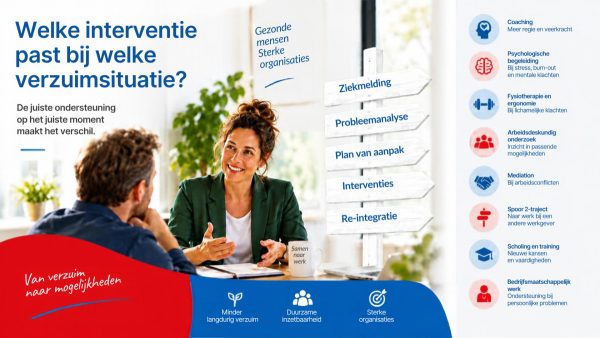
- Inset of an appropriate intervention.
Precisely discussing signals early can prevent escalation.
What does this mean for the Gatekeeper Improvement Act?
Within the Gatekeeper Improvement Act, the prevention of long-term absenteeism is central. The sooner signals of overload are recognized, the greater the chance that appropriate measures can be used before failure occurs.
Prevention therefore calls for active involvement of executives, human resources professionals, case managers and occupational physicians. Together they can contribute to a healthy working environment in which employees feel safe to discuss problems.
From responding to occurrence
Many organizations only take action when an employee reports sick. There is a missed opportunity there. By regularly paying attention to workload, load capacity and well-being, risks can be identified and addressed earlier.
A preventive approach not only helps to limit absenteeism, but also contributes to sustainable employability, committed employees and a healthy organizational culture.
How can GatekeeperDirect support?
In the case of signals of stress, impending failure or prolonged overload, timely intervention can make all the difference. GatekeeperDirect supports employers, HR professionals and case managers with interventions aimed at recovery, resilience and sustainable return to work.
👉 View our range of interventions and discover how early support can help prevent long-term absenteeism.
In stress-related complaints, interventions aimed at prevention, signaling and recovery are essential. Think of Triage psychological stressfulness for early insights, Psycholoog for professional guidance, or workshops such as Workshop: Balance work and privé (Balance & Boost) or Workshop 'How do I prevent stress and burnout in the workplace for employees' for practical tools and awareness. For complex cases, a Multidisciplinair trajectory or Multidisciplinaire Burnout approach is appropriate.
Source: ArboNed and HumanCapitalCare, October 2026.